


How Patients Are Using ChatGPT, Perplexity & Google AI to Find Their Next Doctor
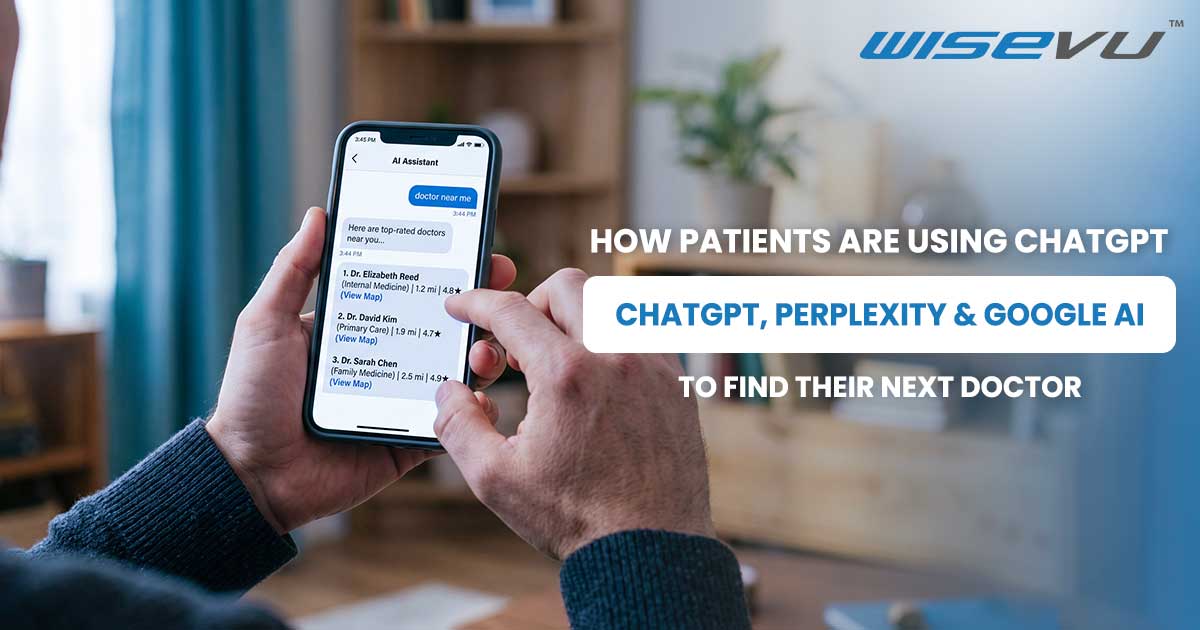
Ask patients today how they picked their family doctor, dermatologist, or physiotherapist, and there is a good chance an AI chatbot played a part in that decision. Recent survey data puts a number on how patients use AI to find a doctor: 36% of American adults who searched for a physician in the past year say a conversational AI tool shaped their final choice, ahead of both organic Google results and traditional physician referrals. The surprising part is who is driving it. Adults between 45 and 60, who juggle chronic conditions, aging parents, and their own care, adopt AI-assisted provider search at more than double the rate of adults under 30. For clinics, patients arriving through an AI recommendation are often the ones with the most complex needs.
ChatGPT To Find A Doctor

ChatGPT built its reputation on a large internal knowledge base, topped up with live web search when a question calls for something current. Ask it to compare two cardiologists on communication style and bedside manner, and it produces a confident, conversational paragraph a patient can read in seconds. That quality suits patients trying to turn vague symptoms into the right subspecialty. The tradeoff shows up in geography. Because the tool is not tied to a mapping system, it can recommend a specialist an hour away or mix up a hospital’s admitting privileges with an actual clinic address.
Perplexity For Finding Doctors

Perplexity takes a different technical route. It runs several searches at once and stitches the results together with numbered citations that link straight back to the original source. For health questions, it leans on state medical board registries, clinical publications, and established provider directories, and it rarely names a doctor without showing where that detail came from. Clinics with a complete, consistent profile across the directories Perplexity draws on tend to show up often in its answers. Clinics with scattered or outdated listings tend to disappear from them completely.
Google AI Overviews For Finding A Doctor
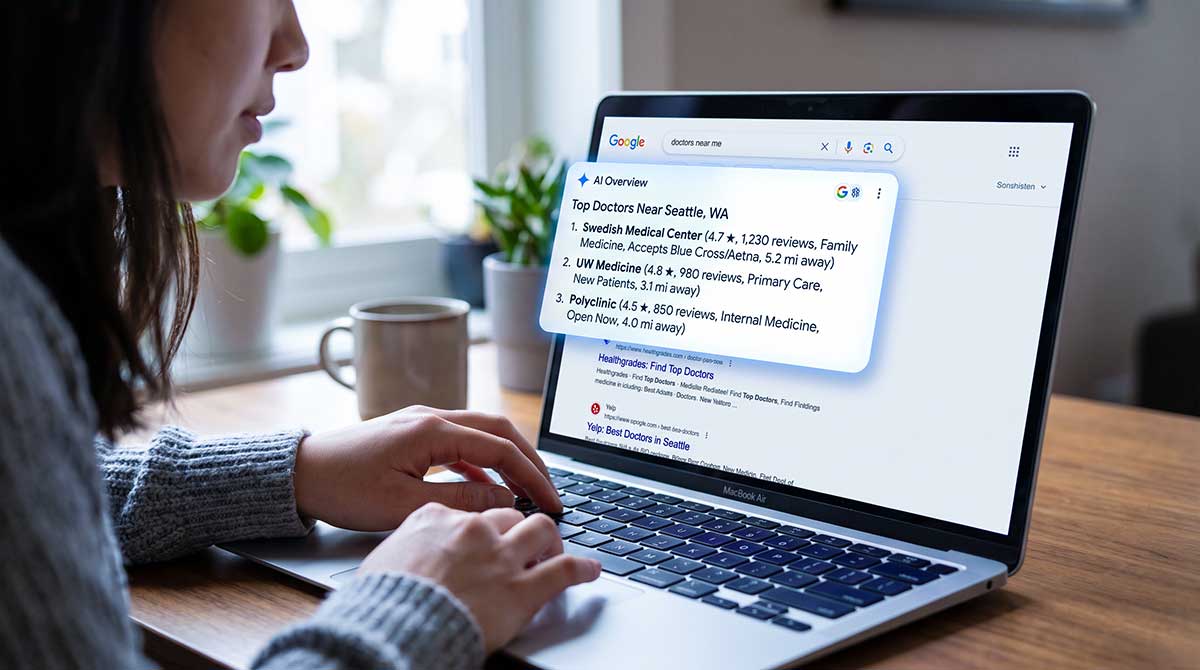
Google folds AI Overviews and its newer AI Mode into results patients already use every day. Behind the scenes, a health question splits into several smaller queries that poll the core index, the Knowledge Graph, and Google Business Profile data at once. What a patient actually sees depends on intent.
- A transactional search, such as pediatrician near me or urgent care open Sunday, usually falls back on familiar map listings and verified business profiles.
- An exploratory search, such as symptoms of a torn rotator cuff or treatment options for gestational diabetes, tends to surface an AI Overview above the organic results.
Clinics that want a say in how they are described in that summary often work with an AI SEO agency to keep Business Profile data and clinical content structured the way these systems expect.
Does ChatGPT Recommend Doctors?

Ask it to name a specific doctor and it usually will, weaving credentials, hospital ties, and patient sentiment into one warm, confident paragraph. That confidence is part of the problem. National survey data shows that 66% of patients who searched for a doctor through an AI tool ran into at least one factual error along the way, such as an outdated address, the wrong specialty, or an affiliation the doctor no longer holds. 60% accepted the recommendation anyway, without checking a second source. Research published in the Journal of Medical Internet Research found that ChatGPT is able to pair a patient’s specific clinical subspecialty needs with their preferred communication style within a single response.
AI Search Vs Google Search For Healthcare
Patients rarely pick one tool over the other. Conversational AI and a traditional Google search tend to handle different jobs inside the same session.
| Factor | Conversational AI | Traditional Google Search |
| What It Handles Well | Pulling reviews, bios, and credentials into one answer | Pinpointing exact location, hours, and directions |
| Typical Weak Spot | Can misstate a specialty or an address | Leaves the patient to open and compare several tabs |
| Patient Trust Level | 55% trust AI as much as or more than search | About 20% trust organic links the most |
Patient Trust In AI Health Recommendations

Trust in these tools runs high, though it is not unconditional. Star ratings act as the first filter most patients apply before considering a name an AI tool suggests.
- Three out of four patients will not book with a provider rated below 4.0 out of 5 stars, regardless of what an AI summary says about their communication skills.
- More than half have cancelled or skipped an appointment after reading a negative review, even for a doctor a friend or physician referred them to.
A national survey of Canadian adults found that about half now use AI tools such as ChatGPT for clinical advice, and those who followed AI-generated treatment advice were five times more likely to report an adverse physical reaction than those who did not.
Final Thoughts

AI has not replaced the doctor referral, the Google search, or the phone call to a clinic’s front desk. It has added a layer that patients now check before, during, and after each of those steps. For medical practices, the practical task is less about chasing a ranking and more about making sure every credential, address, and review a patient might encounter says the same accurate thing, whether a person reads it or an algorithm summarizes it.
How We Can Help
Wisevu works with medical practices and health systems on exactly this kind of digital accuracy, from clinical content and provider bios to the data feeding directories and AI platforms. Our medical SEO team audits provider listings, tightens up review management, and structures clinical pages so both patients and AI tools read them the same way.
If you want your practice showing up correctly wherever patients are asking, visit us to get a free quote.
References
- Blum, K., & Blum, K. (2026, August 18). AI-powered symptom checkers direct worried patients to appropriate care. Association of Health Care Journalists. https://healthjournalism.org/blog/2026/08/ai-powered-symptom-checkers/
- Yee, Amanda et al. “Family caregivers’ acceptance of Artificial Intelligence-enabled technologies for providing care to older adults.” BMC geriatrics vol. 26,1 150. 31 Dec. 2025, doi:10.1186/s12877-025-06249-1
- Yan, Z., Liu, J., Fan, Y., Lu, S., Xu, D., Yang, Y., Wang, H., Mao, J., Tseng, H., Chang, T., & Chen, Y. (2025). Ability of CHATGPT to replace Doctors in Patient Education: Cross-Sectional Comparative Analysis of Inflammatory Bowel Disease. Journal of Medical Internet Research, 27, e62857. https://doi.org/10.2196/62857
- rater8 Study Finds That Patients Searching for a New Doctor Trust AI, https://www.prnewswire.com/news-releases/rater8-study-finds-that-patients-searching-for-a-new-doctor-trust-ai-tools-more-than-google-and-physician-referrals-302789633.html